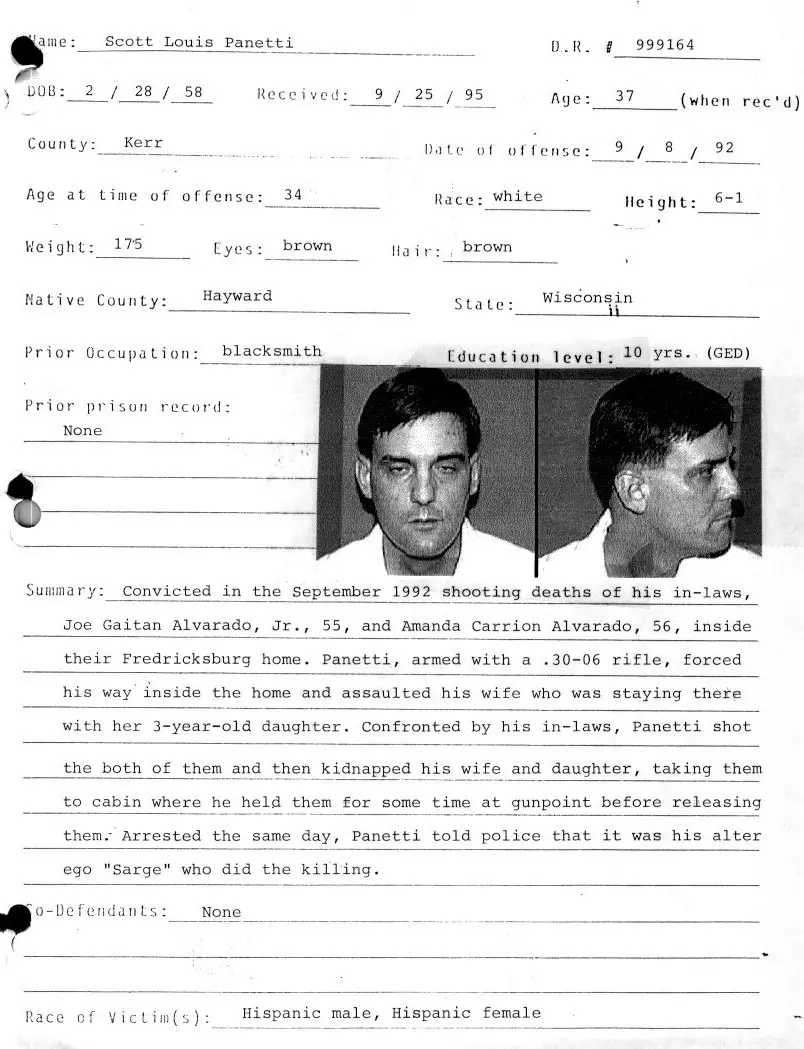
The State of Texas has scheduled the execution of Scott Panetti for December 3, 2014, despite the fact that Mr. Panetti has been diagnosed to suffer from both schizophrenia and schizoaffective disorder.

During his criminal trial, there was quite a bit of hoopla as Scott Panetti represented himself at trial, appearing before the court in what looked to be a cowboy outfit.

Things became more bizarre as he wanted to put the Pope as well as Jesus Christ, President John F. Kennedy, and Anne Bancroft on the witness stand for examination. 
nbsp;


We’d be hard pressed to find anyone who wouldn’t agree that Scott Panetti is mentally ill.

However, the State of Texas has a test for whether or not someone can be execution that allows Panetti’s capital punishment to go forward. The State’s argument is that since Panetti has been shown to recognize a logical connection between the crime that he committed and the punishment that has been assessed as a result (death), then the execution can legally go forward without violating federal constitutional prohibitions against executing someone who is mentally ill.

This has been a long fight.

Panetti’s case has already been before the United States Supreme Court once: the High Court stayed his execution then on the grounds that the State had failed to consider Panetti’s history of mental illness (which goes back many years).  

For those interested in this subject, the amicus curaie brief filed by the American Psychological Association before the Supreme Court on behalf of Scott Panetti can be read online here. 

Moving once again through the court system, the State won arguments before appellate panels that Panetti is indeed legally competent under the Texas definition.

Last month, the U.S. Supreme Court denied Panetti’s request to look at his case a second time.

This week, Panetti’s lawyers have filed more arguments here in Texas trying to stop this execution from happening.

Surely justice will prevail. 

Terence Lenamon will have the honor of being part of a panel discussion on death penalty issues with Sister Helen Prejean next month (see our previous post for time and date details).

As for what that panel discussion might include, check out this video of Sister Helen discussing “Together We Can End the Death Penalty,” in San Francisco in a session hosted by the San Francisco Public Defender’s Office

:


In what is probably no surprise to anyone, the family of Clayton Lockett, who suffered so horribly during his April 29, 2014 execution by the State of Oklahoma, has filed a civil lawsuit for damages.
 
You can read the full complaint online here (thanks to the Death Penalty Information Center).
 
Lockett Family Complaint Names Dr. Johnny Zellmer – Physician Present at Execution
 
The Lockett family is seeking damages because the  “unsound procedures and inadequately trained personnel” caused the deceased to suffer in no small part because of Dr. Johnny Zellmer who was at Mr. Lockett’s execution, and they allege “… was willing to, and did in fact, conduct the medical experiment engaged in by Defendants to kill Clayton Lockett regardless of the fact that these chemicals had never been approved or tested by any certifying body.”
 
Of interest and perhaps of legal weight in this lawsuit is the fact that after the Lockett execution, the State of Oklahoma not only stayed its pending executions for the remainder of 2014 but also revamped its entire execution process as well as its Death Chamber.  


Terry Lenamon Joins Sister Helen Prejean and Others To Discuss Death Penalty 

Mark your calendars for November 8, 2014, when Terence Lenamon will be joined by Sister Helen Prejean and Herman Lindsey (played by Susan Sarandon and Sean Penn, respectively, in the movie, "Dead Man Walking"); along with Broward Public Defender Howard Finkelstein and Melisa McNeill and Betsy Benson, Assistant Public Defenders Homicide Division to discuss issues surrounding capital punishment and the growing problem of innocents facing the death penalty.  

Where:  The Sanctuary Church, Ft. Lauderdale, Florida, 33304

When:  November 8, 2014, at 6 pm


Mental Health Problems and The Death Penalty

October 10, 2014, will be the sixth time that the World Coalition Against the Death Penalty has recognized the international problem of people suffering from mental illness being sentenced to death.

Go here to check out the schedule of events.

From the WCADP site:

On 10 October 2014, the 12th World Day Against the Death Penalty is drawing attention to people with mental health problems who are at risk of a death sentence or execution.

While opposing the death penalty absolutely, abolitionists are also committed to see existing international human rights standards implemented.

Among these is the requirement that persons with mental illness or intellectual disabilities should not face the death penalty.

Terry is a big proponent of QEEG as evidence in criminal matters.  (See our earlier posts for details, including " When will QEEG Brain Mapping Get Widespread Respect in Courtroom?").  
 
His position is that the admission of QEEG evidence in the Grady Nelson death penalty trial was critical to victory in that case.  For more, read the blog post "QEEG Brain Mapping Evidence and Mitigation in South Florida’s Grady Nelson Trial."
 
Terry’s latest:
 
1.  Next month, Terence Lenamon will be part of a panel discussion at Fordham Law School in New York on "Neuroscience in the Courtroom," discussing "How Neuroscience Expands and Transforms Proof."   Here are the details.   
 
Advances in neuroscience are challenging conventional notions about human thought, behavior, pain, and brain injury. These developments are upending established medical concepts as well as traditional moral and ethical considerations. These insights could potentially uproot old paradigms embedded in the law and rules of evidence. 
 
Fordham Law’s “Neuroscience in the Courtroom” has assembled a panel of world-class neuroscientists and distinguished experts, judges, and lawyers to share their knowledge and experience regarding issues posed by advances in neuroscience and neuro-imaging/investigations: diffusion tensor imaging (DTI), functional MRI (FMRI), quantitative electroencephalography (QEEG), volumetric MRI, near infra-red spectroscopy (NIRS), and positron emission tomography (PET).
 
By casting a new light on traditional ideas regarding brain injury, pain, morality, criminal culpability, competence, objectivity/subjectivity, and causation, neuroscience presents an array of challenges that are being played out in the courtrooms of this country and globally. 
 
Attend Fordham Law’s “Neuroscience in the Courtroom” to learn how judges and lawyers can respond to the advances, insights and challenges that neuroscience and neuro-imaging present for proof and adjudication. 
 
The conference is designed for
  • Judges who will preside over cases involving neuroscience issues

  • Attorneys in relevant practices (e.g., personal injury, criminal, trusts and estates) who will contend with neuroscience issues with their clients


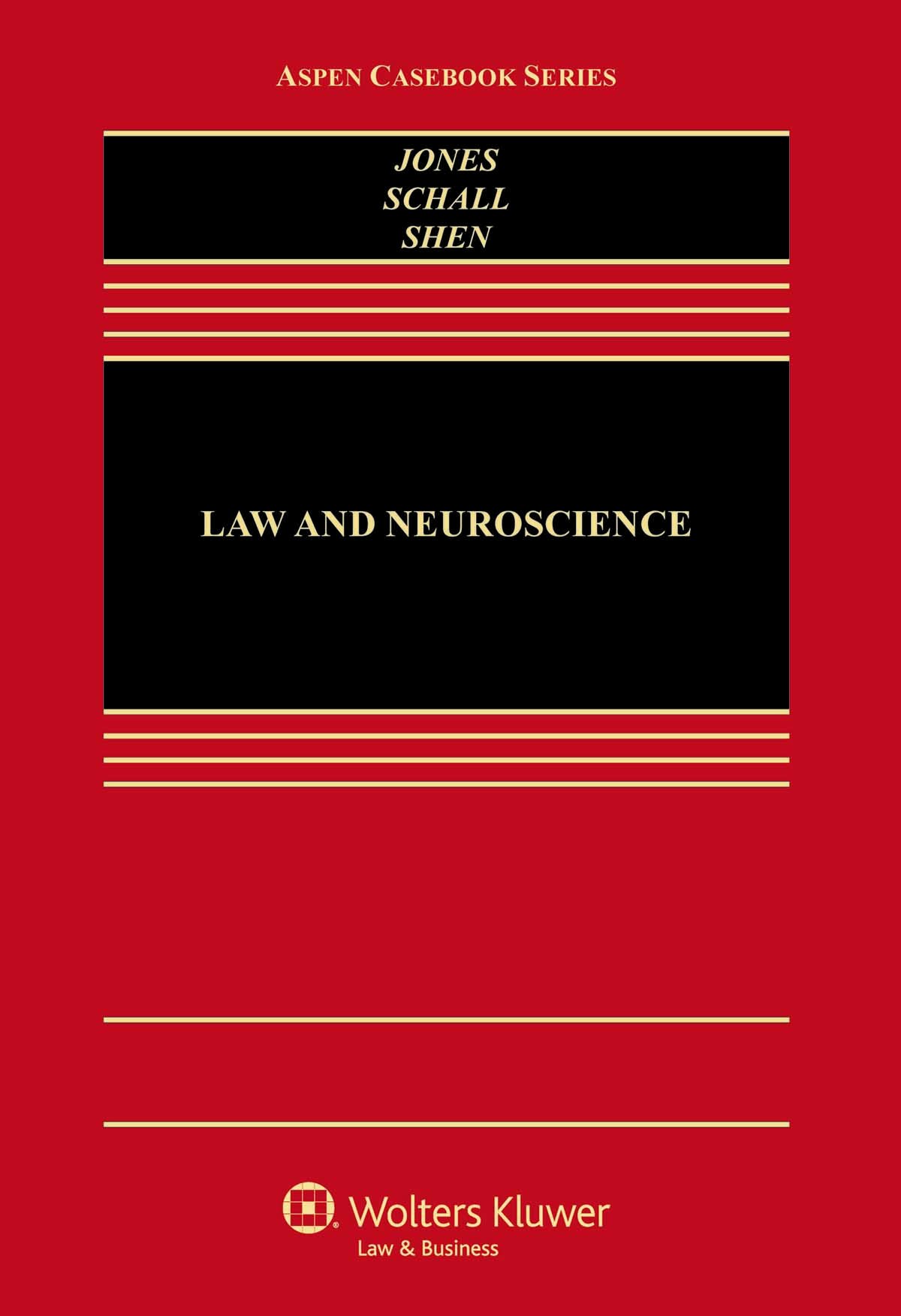
2.  Terence Lenamon’s work in the Grady Nelson case, and his work with QEEG, is featured in the new textbook edition of Law and Neuroscience by Professor Owen Jones et al.


The implications for law of new neuroscientific techniques and findings are now among the hottest topics in legal, academic, and media venues. Law and Neuroscience a collaboration of professors in law, neuroscience, and biology is the first coursebook to chart this new territory, providing the world s most comprehensive collection of neurolaw materials.
 
Features:
  • Designed from the ground up with extensive e-capability in mind, with each e-chapter extensively linked to outside sources.

  • Technical subjects explained in an accessible and user-friendly manner.

  • Extensive glossary of key terms.

  • Covers highly current material; over 60% of the cases and publications included were published since 2008


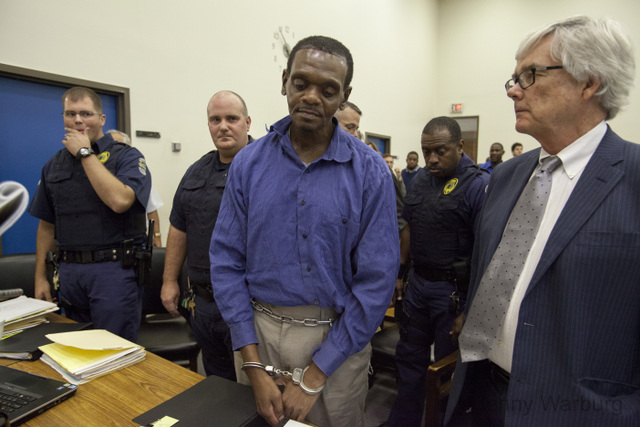
Image from NCCADP.ORG:  Henry McCollum, right after he’s been exonerated.
  
DNA Frees 2 Brothers After 30 Years Behind Bars
 
Henry McCollum and Leon Brown are brothers.  
 
For the past 30 years, McCollum has lived on North Carolina’s Death Row after being convicted of murder and sentenced to death back in 1984. Brown lived on Death Row, too, until his murder conviction was tossed.  The crime happened when Henry was 19 and Leon was only 15 years old.  
 
These two men have literally grown up from boys to men behind the bars of a North Carolina prison facility.  And they are innocent of the crimes for which they were charged.
 
They were accused of raping and murdering an 11 year old girl, Sabrina Buie, and each did sign a confession to the crime.  However, both have low IQ scores which immediately bring the “confessions” into question.  (McCollum tests at 60 IQ; Brown at 49).
 
Confession debates can be put aside, however.  DNA testing done by the Innocence Project has proven that these two men are innocent, and that a man named Roscoe Artis — on Death Row for a similar murder — has a match to the DNA found at the scene of Sabrina Buie’s murder.
 
McCollum holds the record as the longest-serving inmate on death row in North Carolina.  Both of the brothers have now been freed.   
 
Another example of the need for warriors like Terry Lenamon out there in the trenches when the Death Penalty is on the table.    


Now available on Netflix (streaming) is an amazing documentary on the death penalty that delves into capital punishment through the eyes of the "death house" chaplain — a man who witnessed nearly 100 executions in his role as chaplain.  

You can watch "At The Death House Door" 24/7 online or via your streaming TV device if you have a Netflix subscription.  

It also discusses the case of Carlos DeLuna (see our post last month on a new book, The Two Carlos, that deals with the travesty of an innocent man being executed in Texas).

Great documentary for anyone interested in death penalty issues:


Last week, a report was released over in Oklahoma that confirmed that the botched execution of Clayton Derrell Lockett wasn’t the result of any drug or combination of drugs. Nope.

Apparently, the horrific execution of Mr. Lockett was the result of how the IV was inserted into his arm.

You’ll recall that it was only after 45 minutes of obvious pain where the man writhed and struggled against his restraints there on the table that he finally passed away last April.

Now we know that the executioner was not a physician or even a paramedic. In fact, under the current Oklahoma laws, no formal medical training is required for the persons who are responsible for the lethal injection method of execution in that state.

Of course, Oklahoma isn’t alone in horrific executions. Arizona took almost 2 hours to execute Joseph R. Wood III this past July.  

Read the Oklahoma Department of Public Safety Report on the Execution of Clayton D. Lockett here. 


This week, the Associated Press did a nice job of listing the various problems that the lethal injection method of execution has had since it was first used by the State of Texas in 1982.  You can read this reporting here, “Some Lethal Injection Problems in US Executions.”
 
Needless to say, the botched executions that have happened in 2014 are far from the first problems that have resulted while executing a human being by injecting them with chemicals.  It’s an execution method that may be viewed in future years as heinous, cruel, and just plain wrong.  Hints of this include the growing alarm being voiced by medical professionals to lethal injections.  
 
Terry Lenamon has had a longstanding concern about this method of execution — especially when states turned to drugs that vets commonly use to put down pets. See our earlier posts for more on this, including “As These Words Are Being Typed, Ohio Is Killing Ken Biros in an Unvetted Execution Method, Unless You Count Euthanasia of Dogs as Vetting.
 
However, instead of halting executions it appears that capital punishment continues in Texas, Florida, and other states without apparent concern for these lethal injection methods.   Texas has scheduled another execution using lethal injection – the first since April 2014.
 
 
As for what is going to be used for execution?  We don’t know.  


Is anyone else concerned about this?  

Is anyone else thinking that there’s a constitutional problem with both the secrecy as well as the methodology?